Skip to content

HOW IT WORKS

Walk through a practice before you start

Every screen below is the real practice room, once for a free practice and once for a case.

A free practice: Maya’s promotion

Your friend Maya was passed over after six months on a project. She hasn’t asked what to do.

  1. Pick one

    Three free practices wait in the library, each with its time. This one takes 8 minutes.
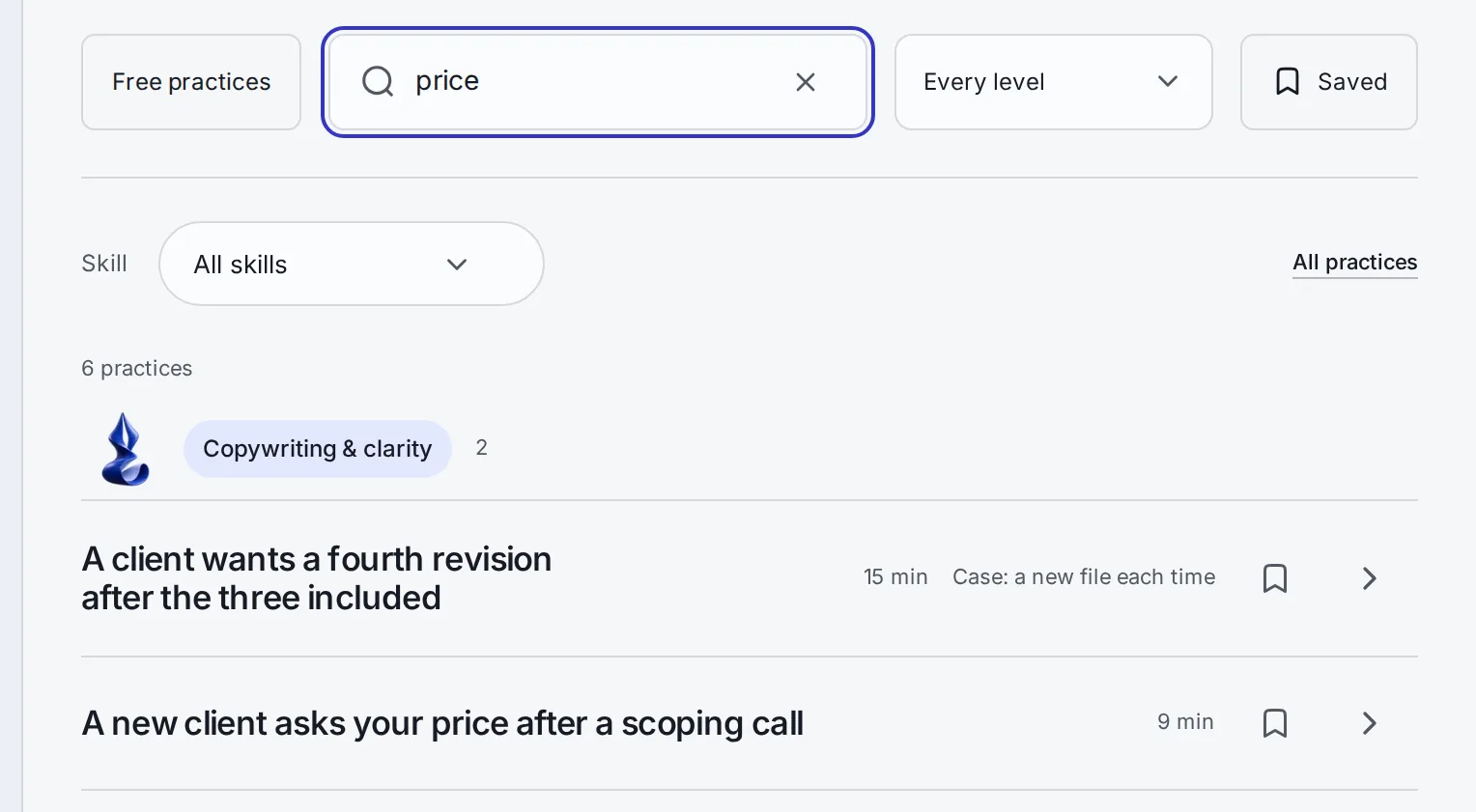
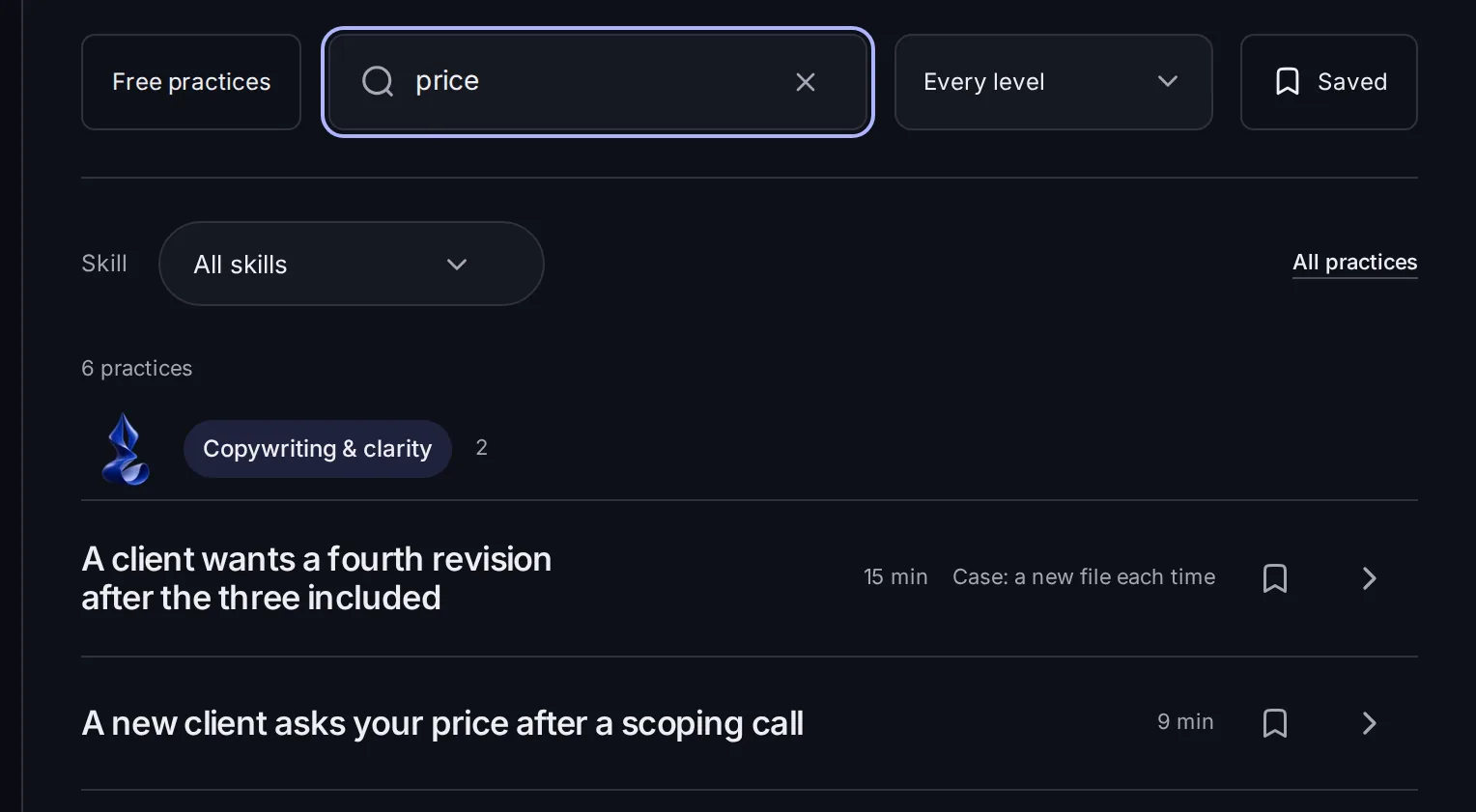
    The practice library’s search box and its first free practice, with a Free tag and its minutes.
    The practice library’s search box and its first free practice, with a Free tag and its minutes.
  2. Respond

    Read Maya’s message and choose how you’d open. Then write your reply in your own words.
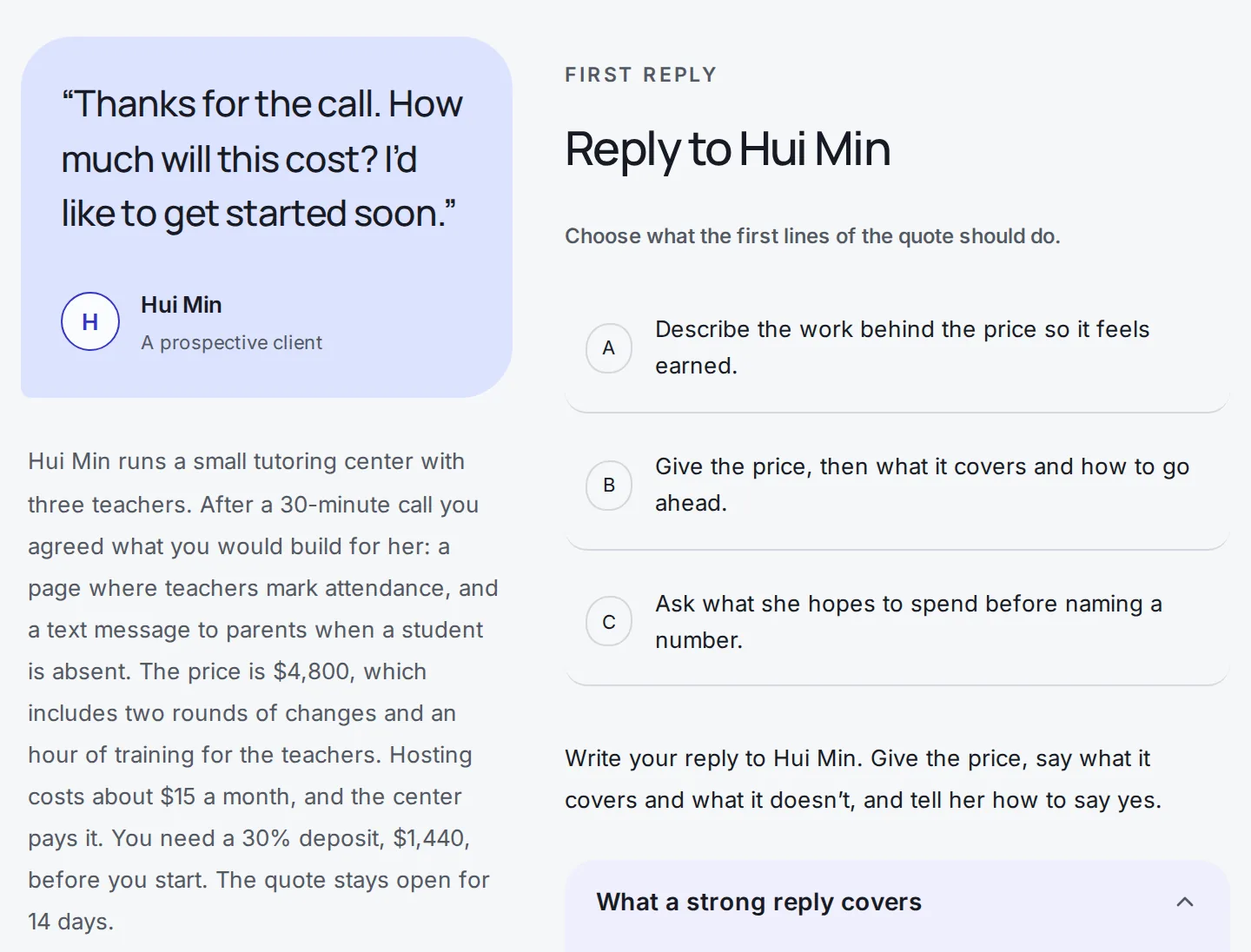
    Maya’s message, “Six months on that project. Six months.”, beside three ways to open the reply.
    Maya’s message, “Six months on that project. Six months.”, beside three ways to open the reply.
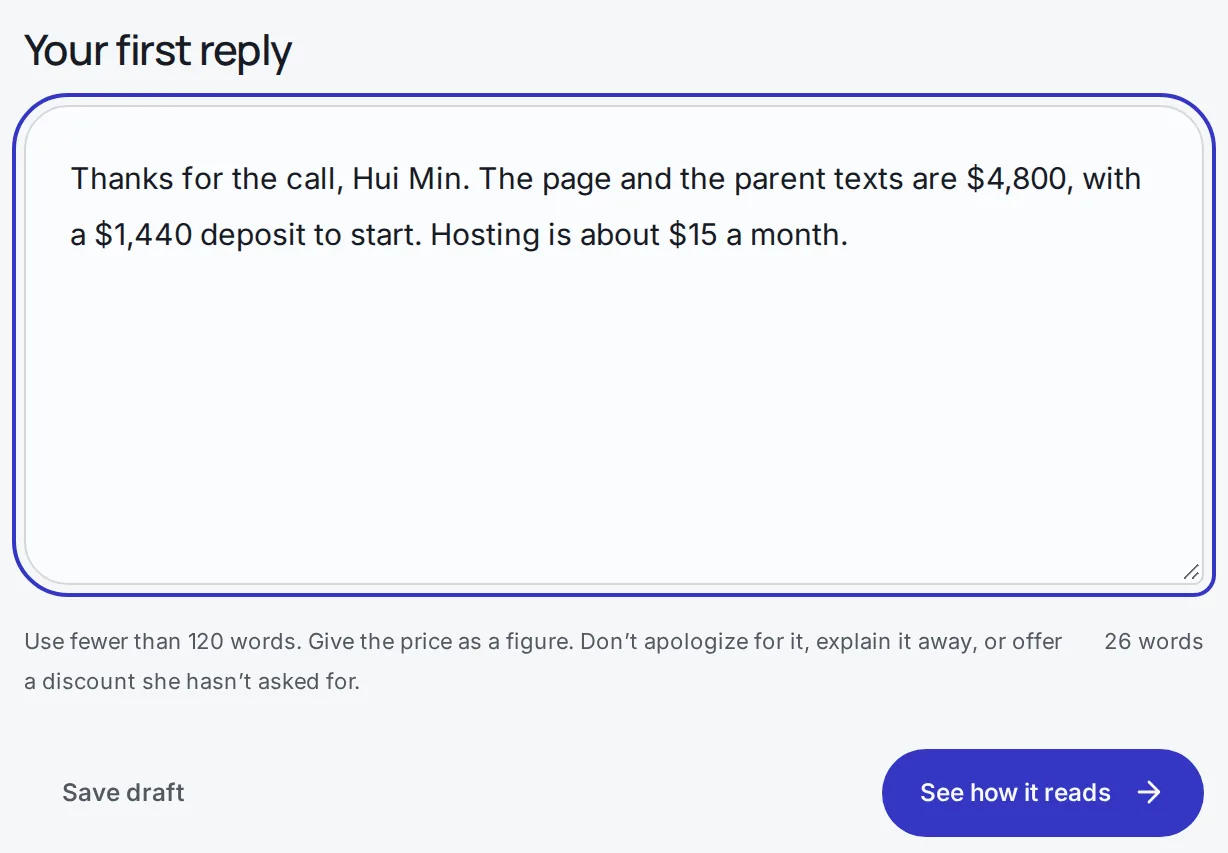
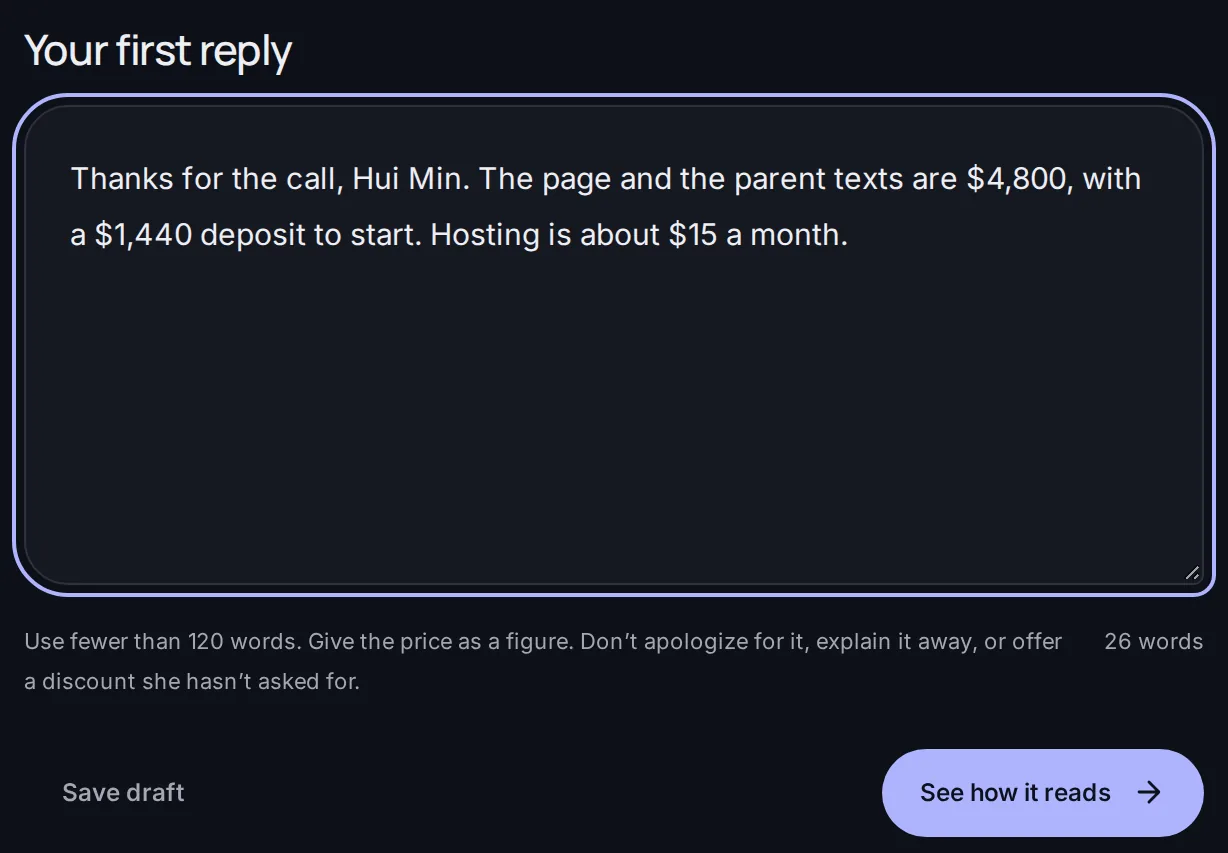
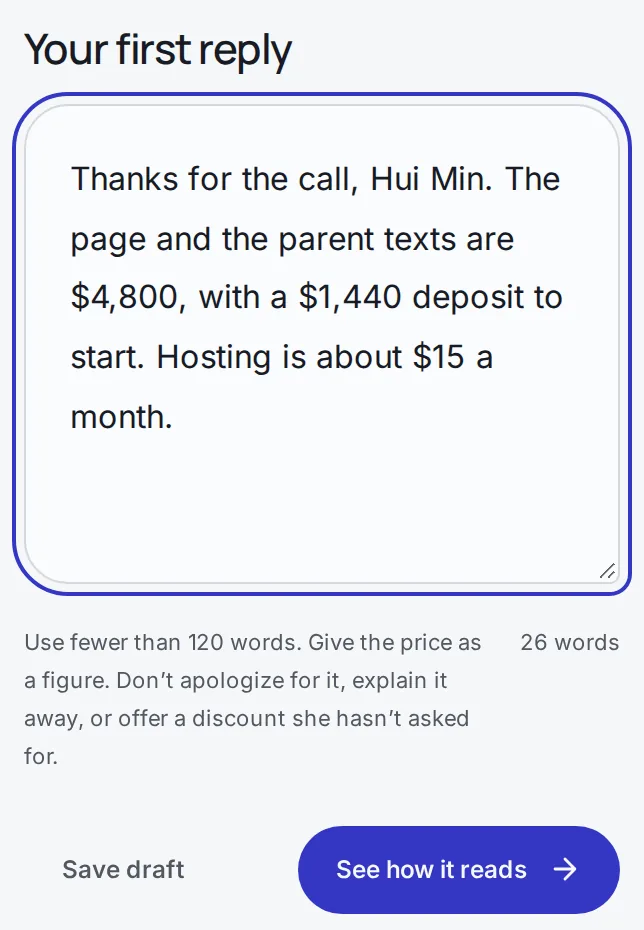
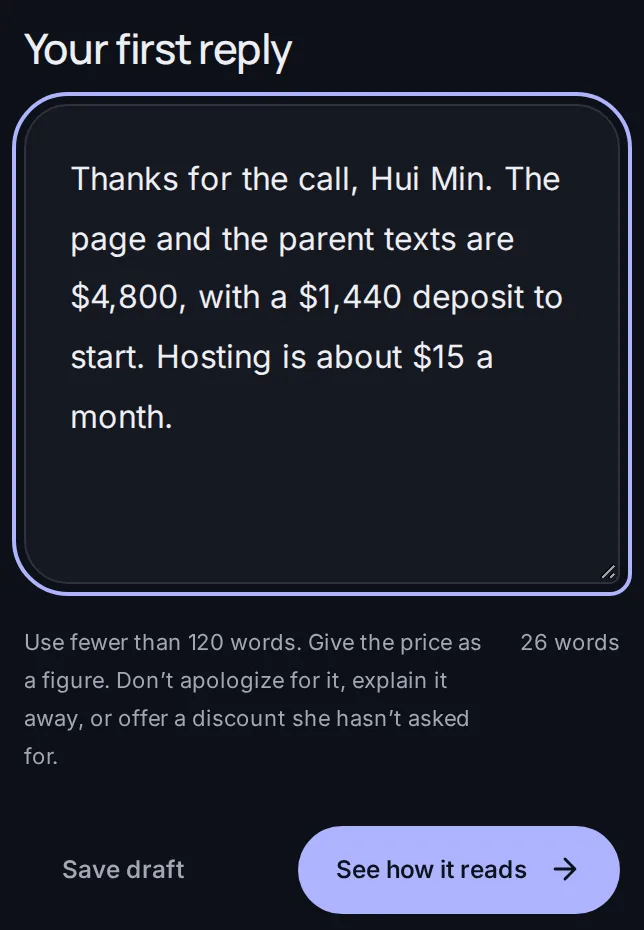
    The reply box holding a typed first reply to Maya, with a See how it reads button.
    The reply box holding a typed first reply to Maya, with a See how it reads button.
  3. Review & revise

    Read your draft against what a strong reply covers, then rewrite it. The AI coach gives a second view if you ask.
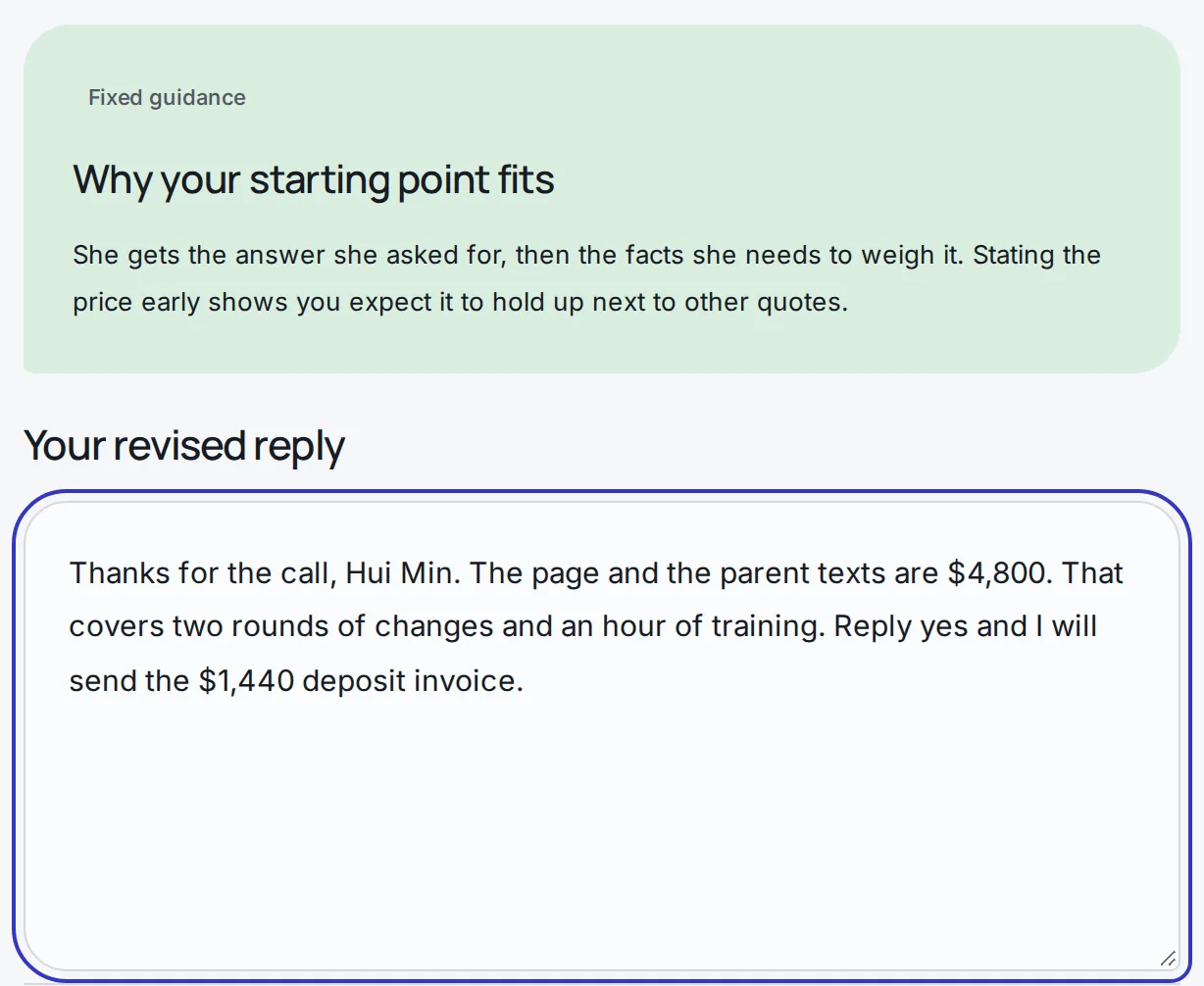
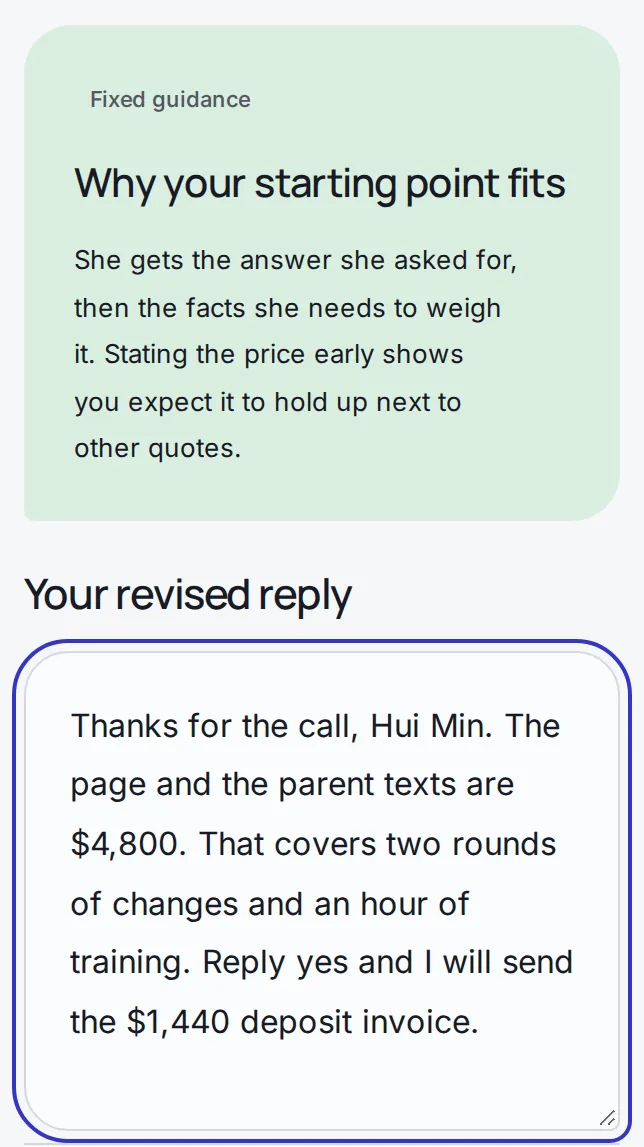
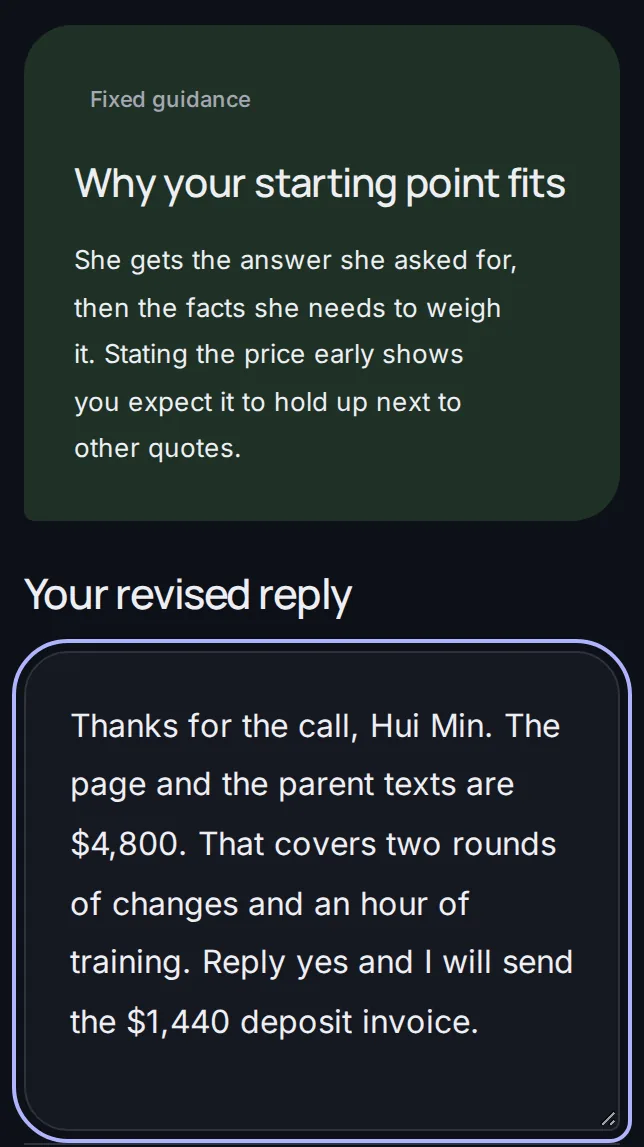
    The guidance on why the starting point fits, above a box holding the draft to revise.
    The guidance on why the starting point fits, above a box holding the draft to revise.
  4. Reflect

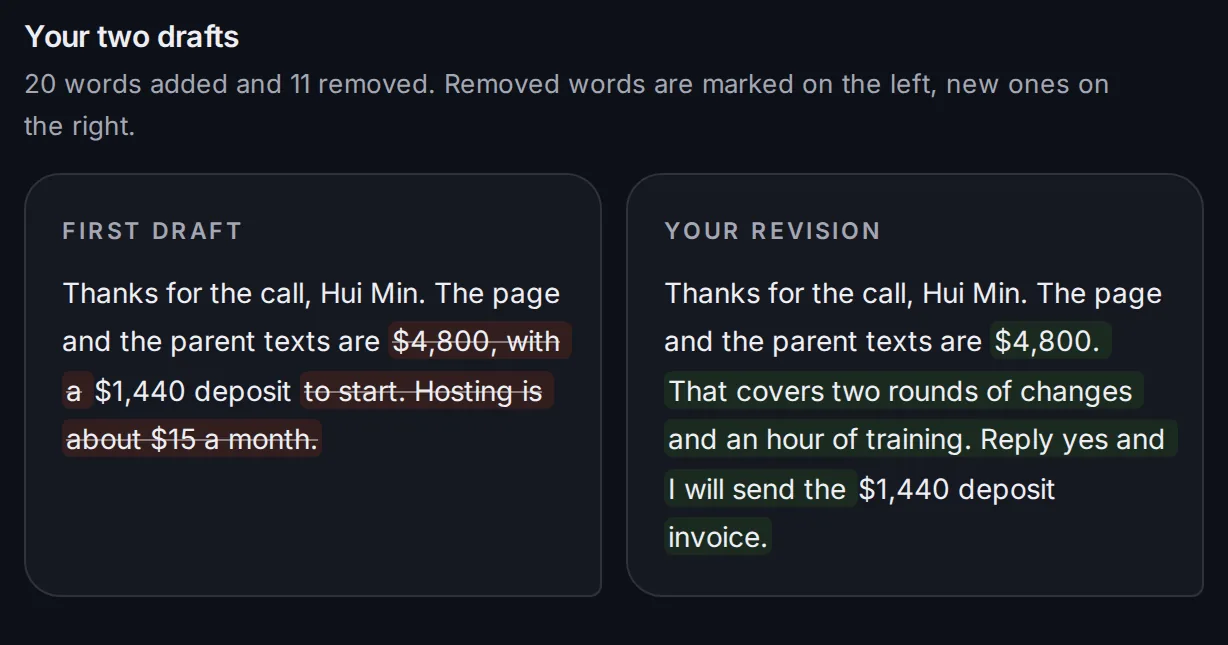
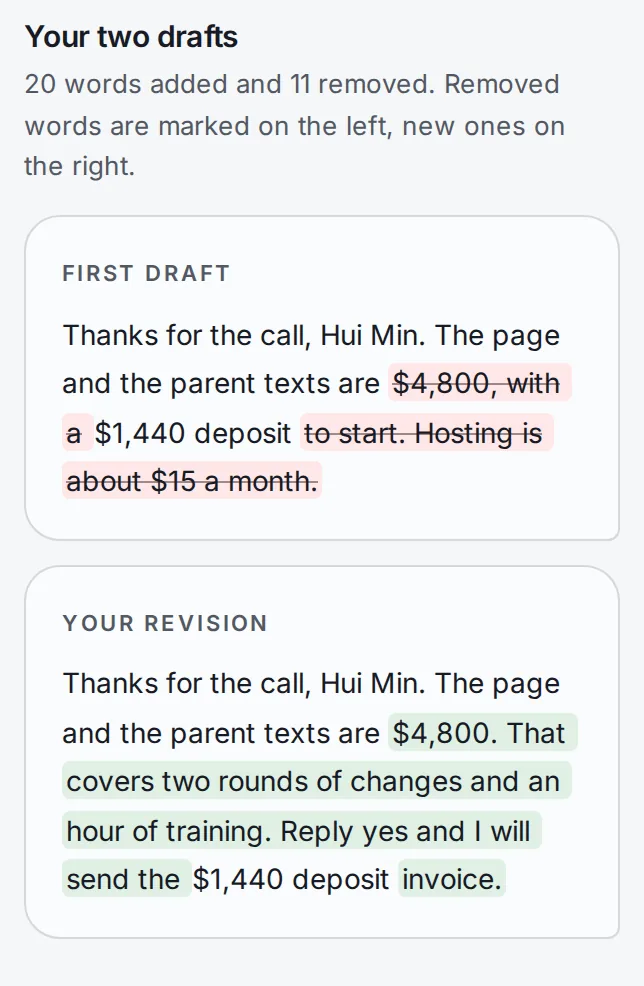
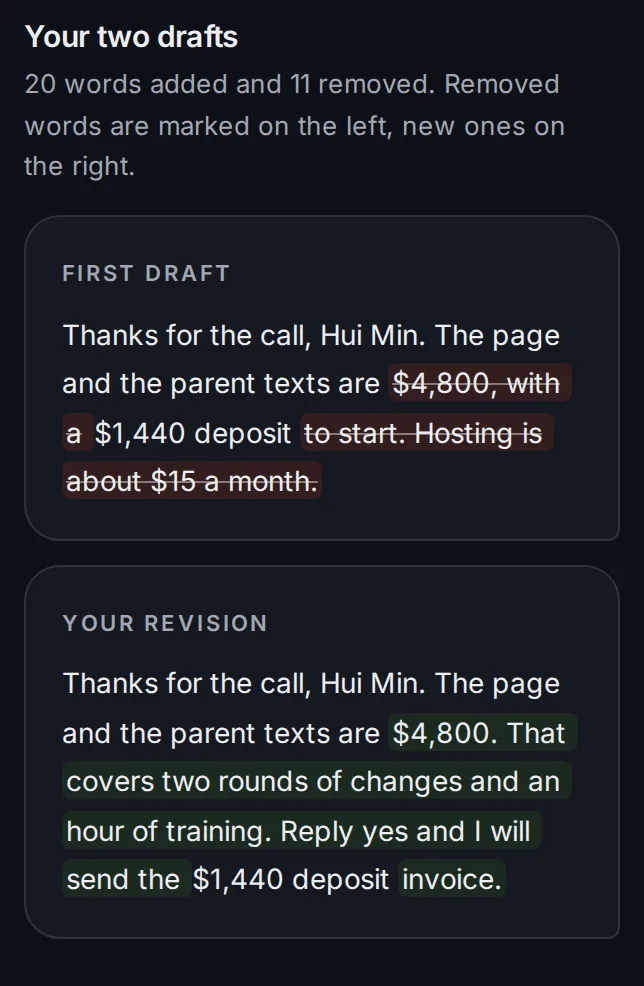
    Your two drafts sit side by side, with the changes marked. Then you write a when-and-then plan.
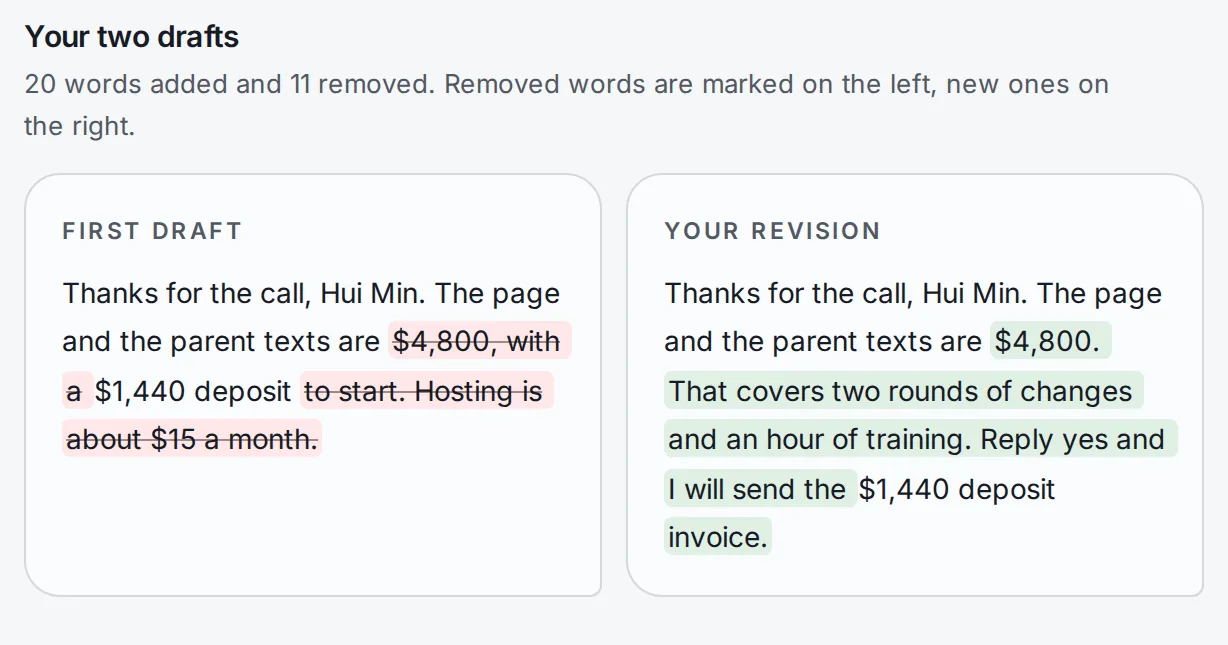
    The first draft and the revision side by side, with removed words marked on one and added words on the other.
    The first draft and the revision side by side, with removed words marked on one and added words on the other.
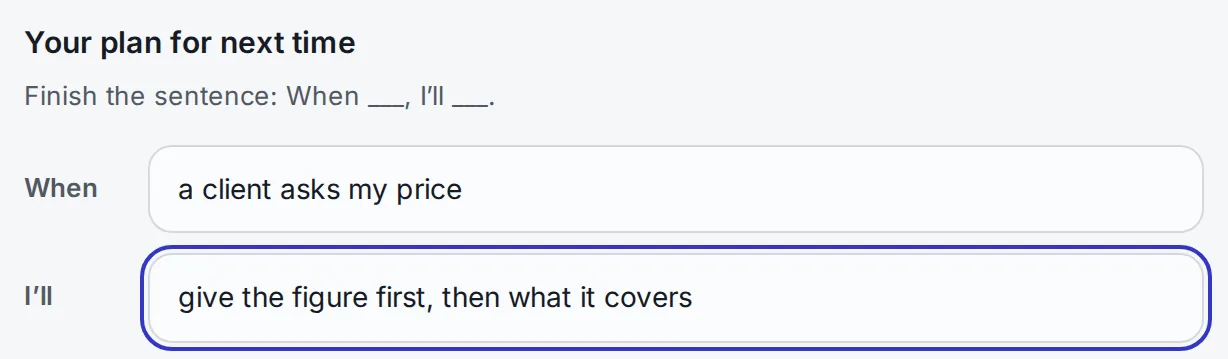
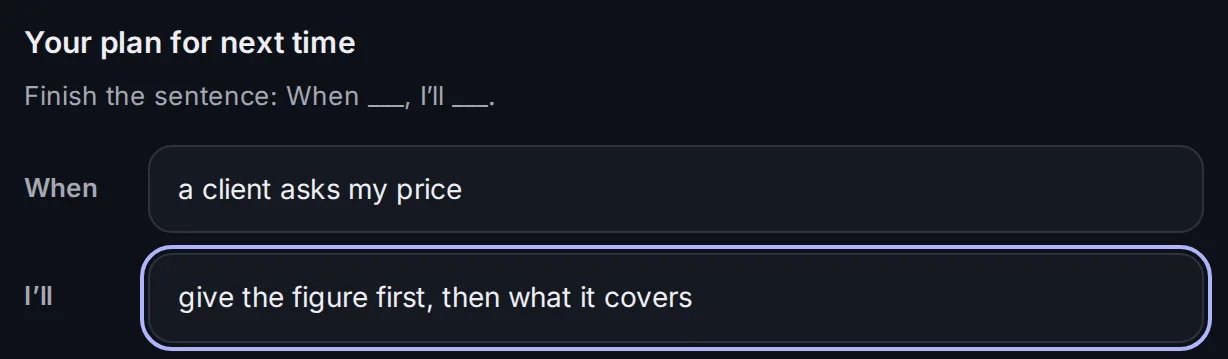
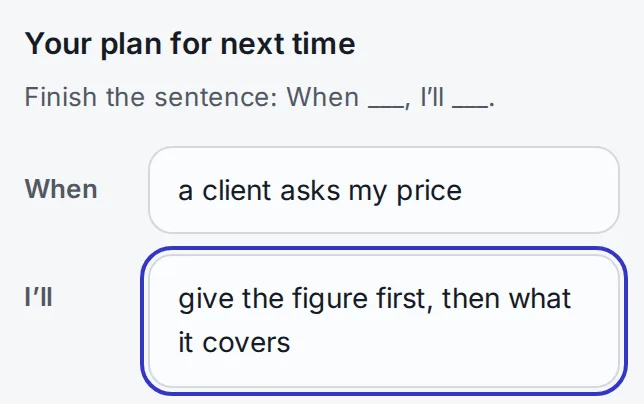
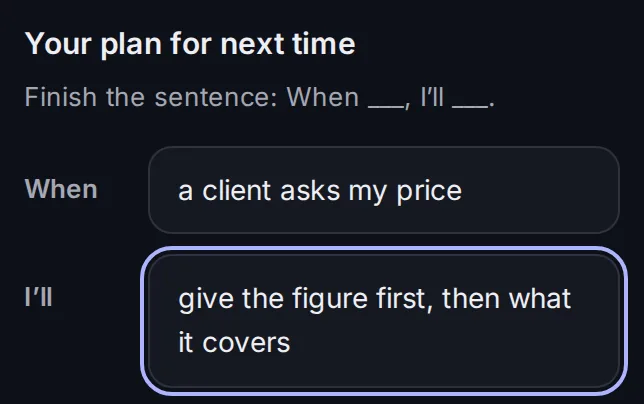
    The plan for next time: when someone tells me about a bad day, I’ll ask what kind of support they want.
    The plan for next time: when someone tells me about a bad day, I’ll ask what kind of support they want.

A case practice: the quiet student

You teach a project-risk module and one master’s student is lost. Your notes on every student are in the case file.

  1. Investigate

    Open the case file: each student’s lines from the discussion, the short exercise and after class. Flag the lines that matter, then pick who needs a follow-up.

    The case file’s first student, with three lines to flag, one of them flagged, and the start of the next student.
    The case file’s first student, with three lines to flag, one of them flagged, and the start of the next student.
  2. Debrief

    Lock in your decision and the case checks it. Pick the wrong student and the page says so, then shows the lines that gave it away.
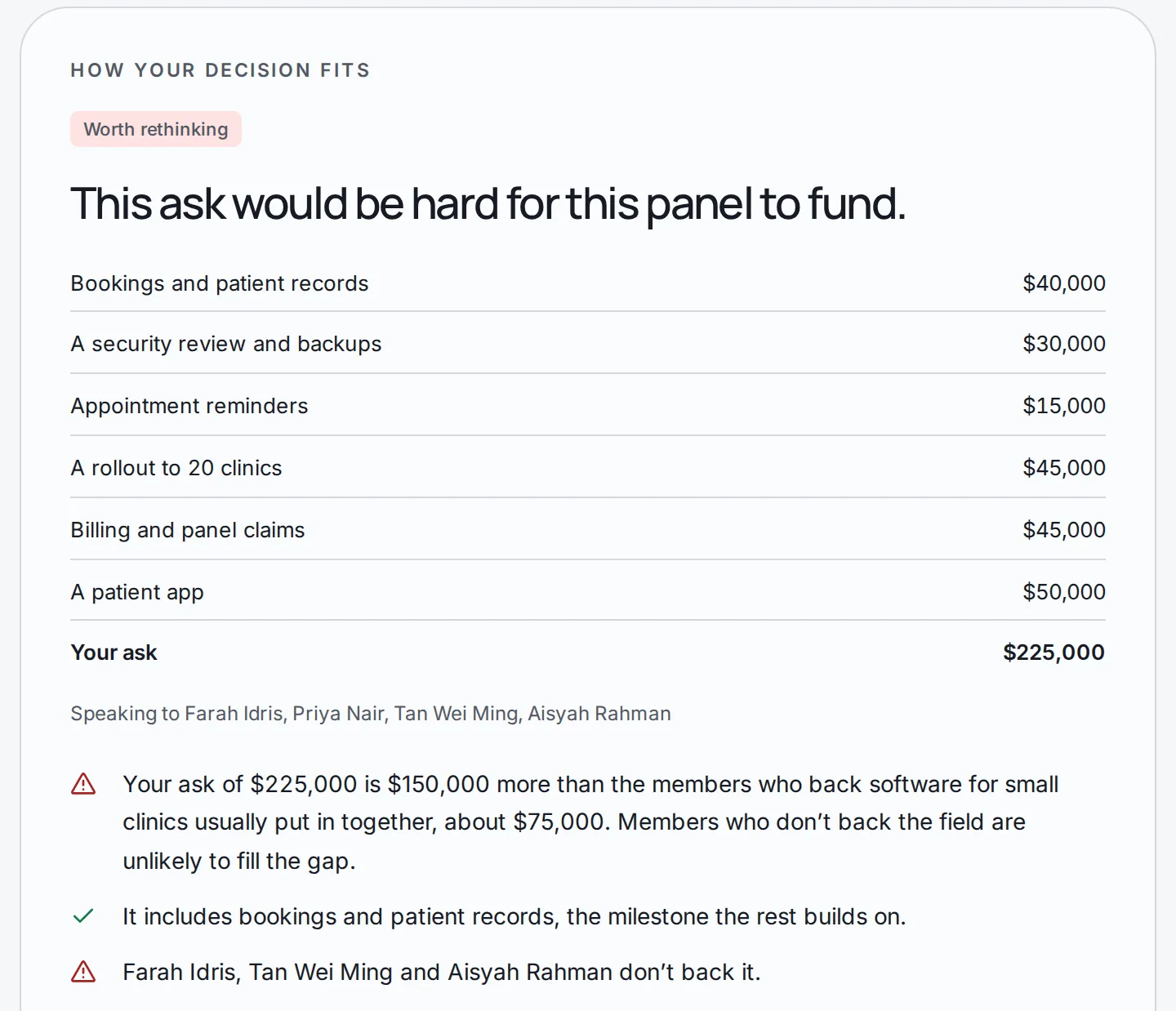
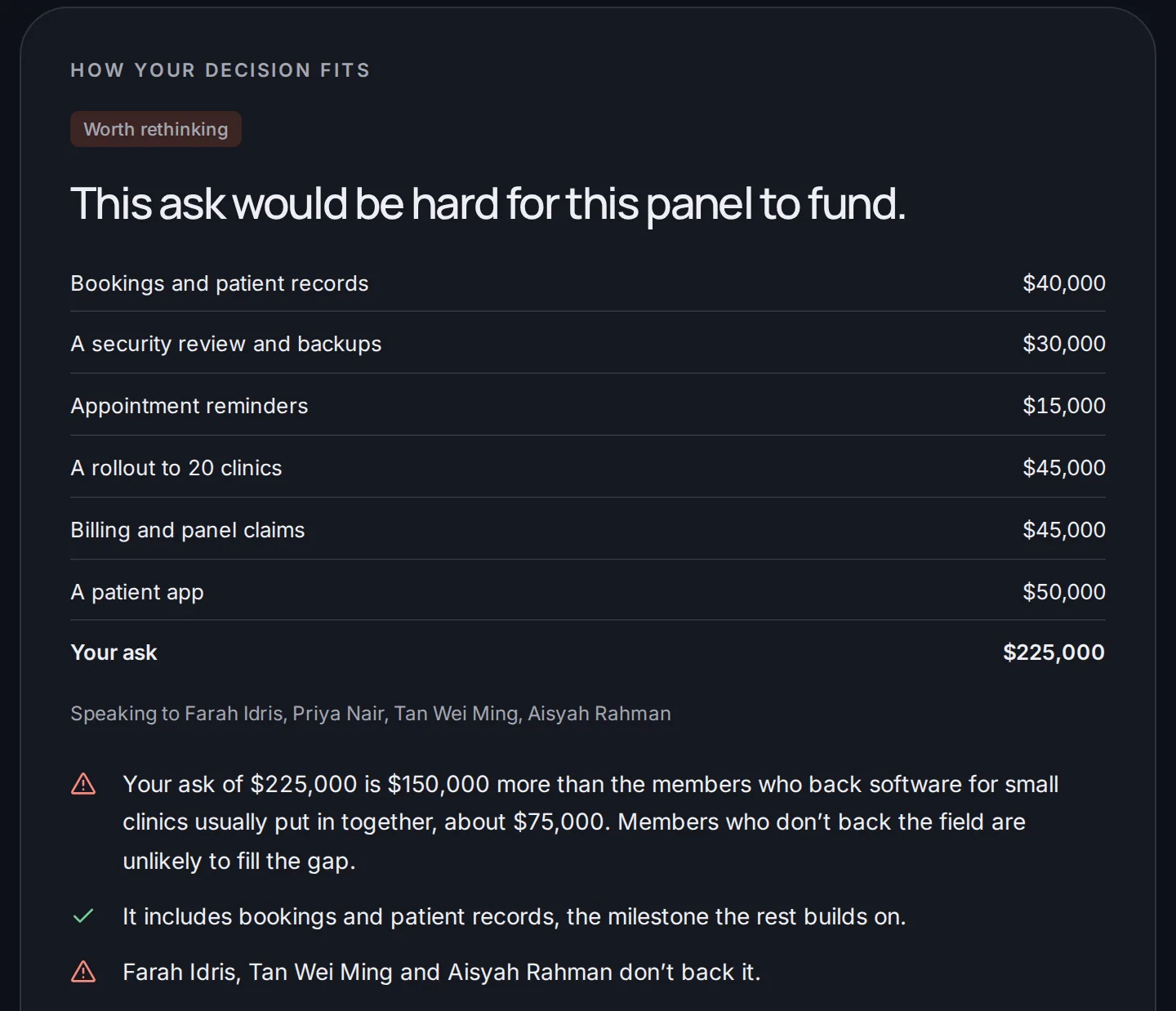
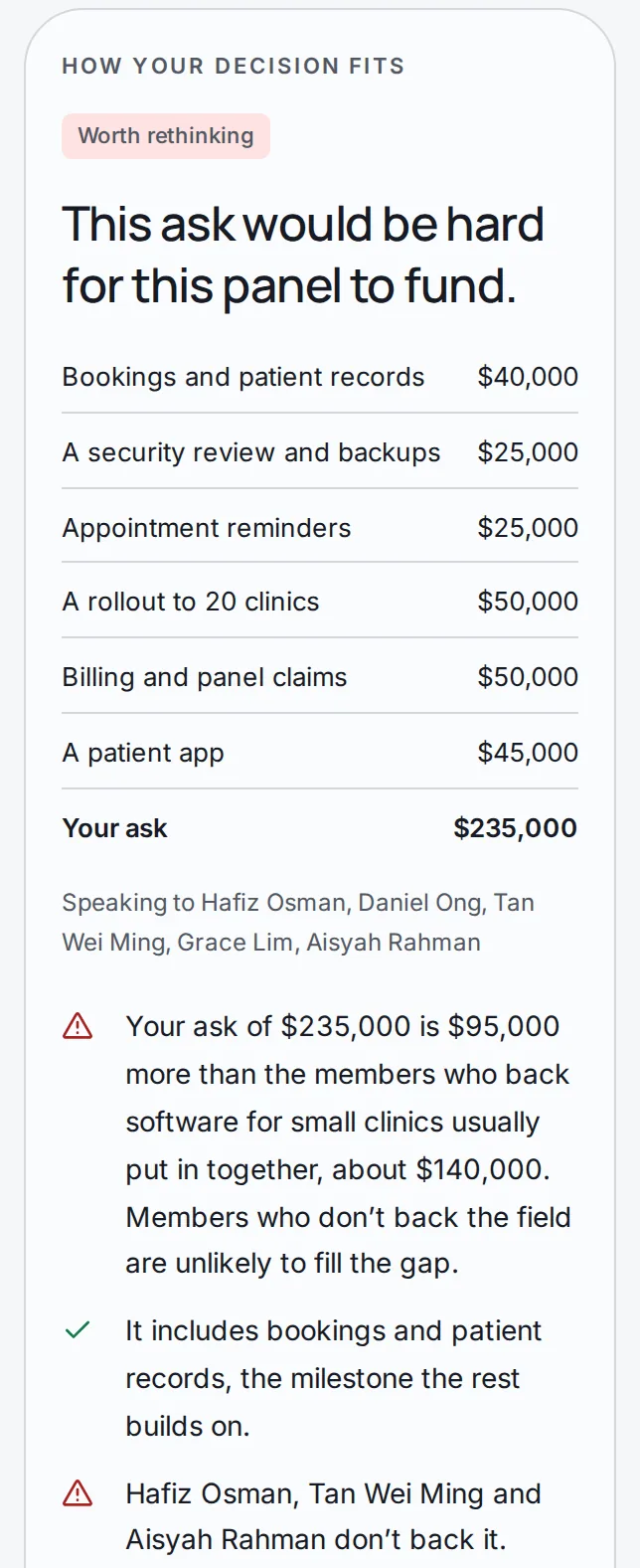
    A “Worth rethinking” result naming the student who needed the follow-up and why the lines chosen did not show it.
    A “Worth rethinking” result naming the student who needed the follow-up and why the lines chosen did not show it.
  3. Write

    Write what you’d say to that student. Choose what the message leads with, then put it in your own words.
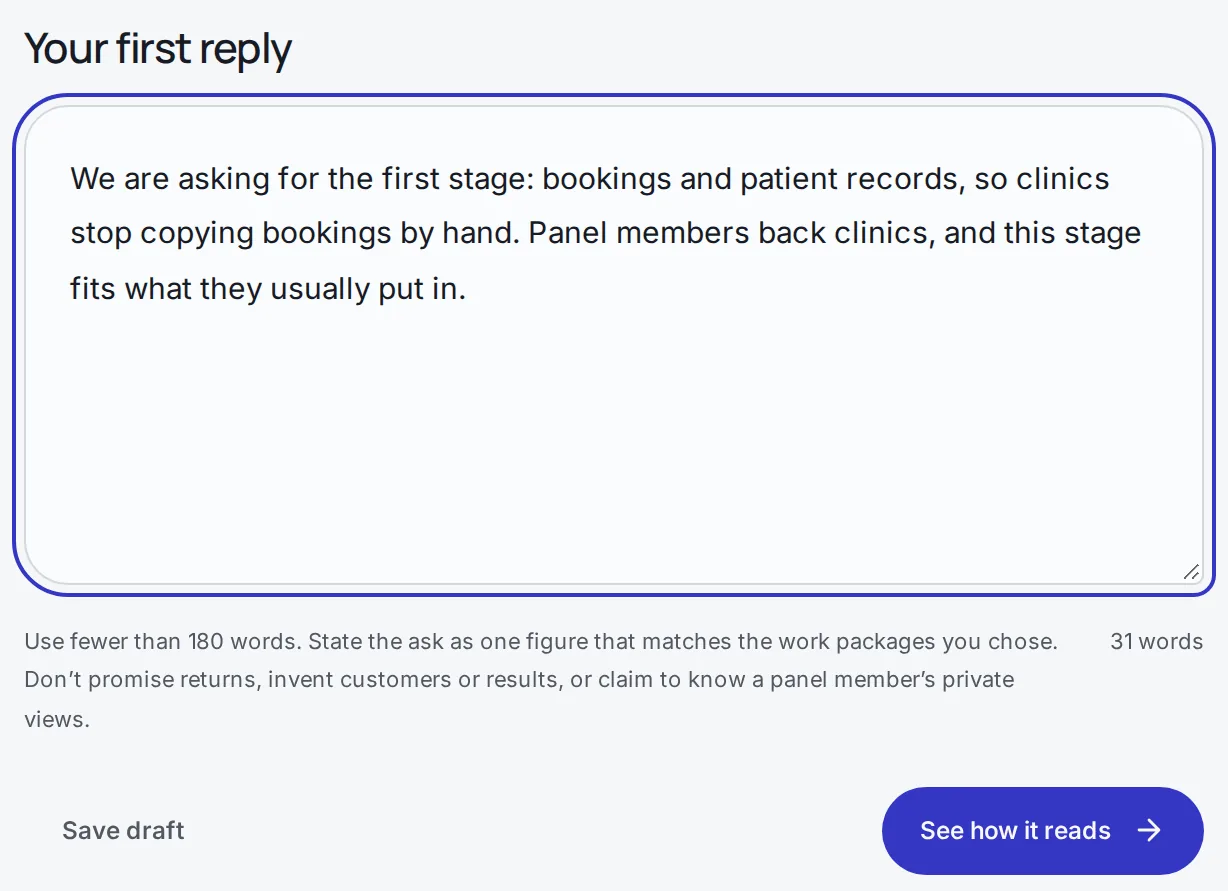
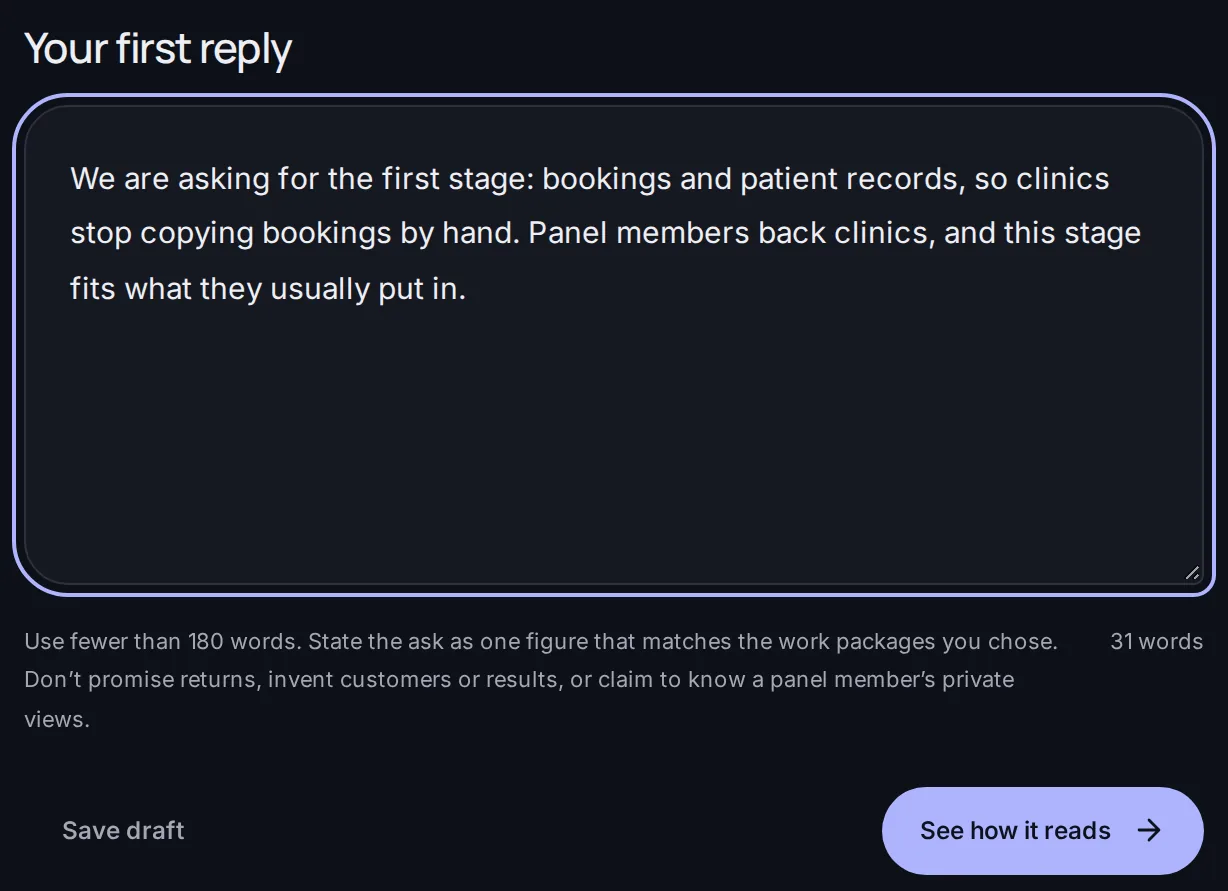
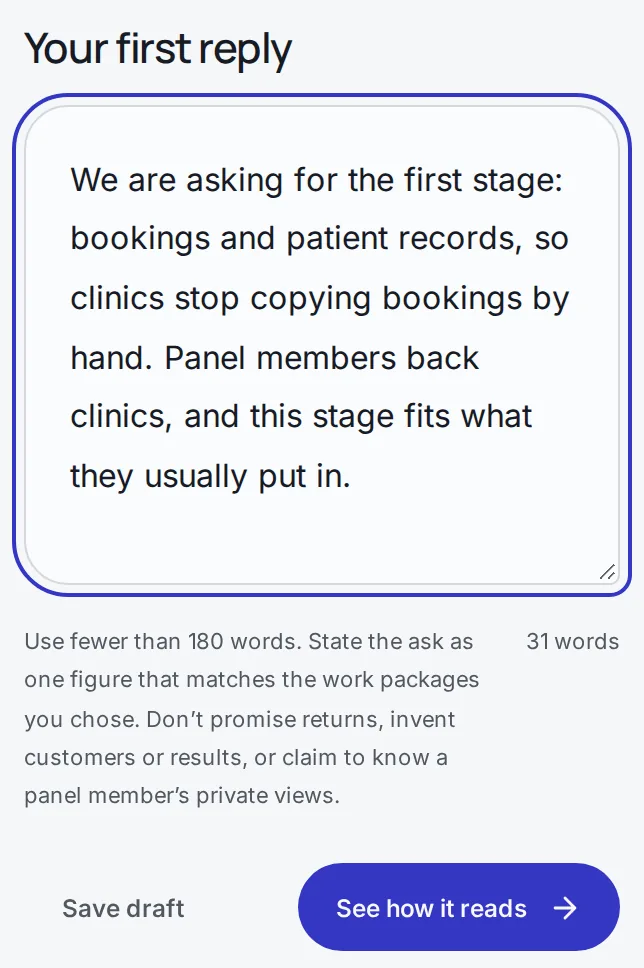
    A typed reply to the student offering a time in office hours, with a See how it reads button.
    A typed reply to the student offering a time in office hours, with a See how it reads button.
  4. Review & revise

    Read your message against what a strong reply covers, then rewrite it, as you did for Maya.

  5. Reflect

    Compare both drafts, then write a when-and-then plan for the next student who goes quiet.

Start with Maya

It takes about 8 minutes, and you don’t need an account.

Try a free practice